Fire Banner

Monday, June 27, 2011

Writing a good journal paper introduction

I have been serving as an Associate Editor of an international journal for over two years now. In that time I have seen over 400 papers submitted to the journal and have been responsible for ushering a percentage of them through to publication. What follows is a personal opinion and is not the opinion of any journal or publishing house.

We (the reviewers and editors) frequently guide the authors through one or more revisions to their papers before they are deemed ready for publication. For a number of papers, particularly when they were written by non-English speakers, there is a need for considerable editing of the manuscript to bring it to an acceptable standard in terms of language. I don't mind this. For many papers we require that more explanation or analysis is included in the main content of the paper. This is fine by me.

But one aspect of many papers continues to annoy me. And that is poorly constructed an uninformative introductions.

An unreasonably high number of journal paper introductions contain a section similar to this:
The [topic of interest] was first identified by Researcher et al. (year). Someone & Other (year) studied the problem in more detail. The issue was studied using computer modelling by Modeller & Geek (year). Navier & Stokes (year) compared different modelling techniques within this area. More recently Experimentalist et al. (year) confirmed the existence of the issue in a series of laboratory scale tests.
And so on. Imagine that padded out to a whole page of text. Basically just a list of names and references. The problem I have with this is all it really tells me is which papers the authors have heard of. It doesn't even tell me that the authors have read these papers. It rarely tells me what Someone & Other actually did or what their conclusions were. While these details are actually what I need to know.

This is my plea. If you are writing a journal paper, please do not write introductions like this! A good introduction only needs three elements:
  1. A short section explaining to the non-expert reader why the topic under consideration is relevant and worthy of study, and
  2. A section summarising the conclusions of past research into the topic. This should not be a list of names, but rather a brief discussion of facts or theories.
  3. A very short section which explains why the methodology used in the present study was chosen and why it will provide new insights.
If you intend to work in one field for a significant period of time (e.g. you are doing a PhD) and are likely to publish several papers on related topics, then a great idea is to publish a review paper and simply refer to that in the introductions to all your other papers.

Finally, I would recommend that when you are writing a scientific paper, that you write the main content first, and then go back and write the introduction. You only need to cite papers in your introduction that are actually relevant to your study within the topic. Your introduction only needs to provide the reader with two things:
  1. Enough information regarding previous work so that they can understand your work, in context. And,
  2. Sufficient references to relevant publications so that the reader can tell that you know enough about the subject that your research / opinion is worthy of consideration.
So, in summary, please keep introductions short and full of content, not names. Thank you.

Friday, June 24, 2011

Water mist in tunnels - First hand experience

What follows are some personal reflections on my attendance at the SOLIT2 project workshop in Gijon, Spain, on 22nd & 23rd June 2011. But first, some context.

As might be expected for somebody who has worked in Fire Safety research for over a decade, I have seen quite a few experimental fires. We regularly fire test things in our lab and I've seen plenty of fires with heat release rates in the range of 300-500 kW. I have also seen fires in our lab as big as 700-800 kW and have seen the reactions of people to fires on this scale. They generally start backing away slowly and start feeling uncomfortable, both with the level of radiant heat they start experiencing and the 'what would happen if...' thoughts that start going through their minds.

Those fires are the limit of what our lab can handle (we can go transiently to 1000 kW - that is, 1 MW - but we rarely go that big). For various reasons, I've also been witness to some larger fire tests in the burn hall at BRE, for example, I've seen a pool fire that was a little over 2 MW and a solid plastic fire that was also about 2 MW. I've stood a few metres away from such fires and know what the radiant heat feels like. 2 MW is a big fire. When we did the Dalmarnock Fire Tests a few years ago, the peak heat release rate (for an entire living room / home office on fire) was around about 5 MW. 5 MW is a big fire.

But when we start talking about design fires for tunnels, we start hearing numbers like 30 MW or 100 MW and its hard to grasp just how big a fire that means.

So when I got the opportunity to witness an alleged '100 MW pool fire' in the San Pedro de Anes test tunnel, well, how could I refuse?

The SOLIT2 workshop was held in a nice hotel in Gijon, Spain, and featured not one but two visits to the nearby TST test tunnel to witness fire tests with water mist. These were allegedly not demonstration tests, but were part of the SOLIT2 test programme, investigating the abilities of a water mist suppression system to mitigate the effects of a fire in a tunnel.

The workshop started at the hotel on Wednesday 22nd June 2011. The first presentation, by Stefan Kratzmeir of IFAB, gave the context of the SOLIT2 project - the aim is to develop and test water mist technology to either:
  1. Achieve the same same level of safety in a tunnel with a water mist system at a reduced cost compared to other common tunnel safety systems (i.e. by installing water mist, you can 'trade-off' and reduce the specifications of other safety systems, such as structural fire protection, or ventilation systems, etc.), or
  2. Achieve a greater level of safety in a tunnel with a water mist system at the same cost as would be spent on other systems (i.e. still trading off systems).
So it was clear from the outset, the objective of this project was to reduce costs without increasing risk. But enough on the presentations, we were rapidly shipped off to the test site to witness a large pool fire test.

The fire was not 100 MW as advertised. It was probably about 50-60 MW, which is still [insert adjective or expletive of your choice] big! The 700 l of diesel fuel was distributed across 7 large rectangular fuel pans (each at least 2 m.sq). Once lit, the fire grew rapidly in severity (as pool fires do) and soon we (the observers, standing about 45m upstream of the fire) found ourselves looking up at a layer of smoke billowing across the ceiling above us. This is the dreaded phenomenon of 'backlayering' - even though there was a longitudinal flow of about 2 m/s, it wasn't sufficient to drive the smoke away from us.

It became clear that this hadn't been an intentional part of the demonstration. Some of the Fogtec and IFAB people started looking worried. But the water mist system (spanning a stretch of 50m of tunnel straddling the fire location) was started about 90 s after ignition (I think the intention had been to start it after 60 s) and soon the backlayering began to shrink back and ultimately vanish into the mist.
What rapidly became clear was that the water mist was not extinguishing the fire. It was hard to tell from an observer's point of view, but it appeared that the water mist was also not suppressing the fire, at least, not using the dictionary definition of suppressing (which involves concepts like halting growth and reducing size). The fire appeared to burn at about the same level of severity while the water mist operated. However, what the mist achieved was a reduction in backlayering, possibly due to a reduction in smoke production, or possibly due to a reduction in the buoyancy of the smoke. The mist also provided thermal protection for the tunnel structure and (had there been anyone there) from the people in the vicinity of the fire.

After the pool fire test we were returned to the hotel for an odd lunch of nibbles and finger food and an afternoon of fairly uninteresting presentations (in which the same point was made over and over again - you can trade off other systems against water mist. OK. I get it). Apologies to the speakers, if they're reading this, it wasn't that they were all boring, it was just that I'd heard most of it before, and there was a lot of repetition.

Day 2 of the workshop featured another presentation on the findings of the SOLIT2 project and then another coach trip to the test tunnel. This time, the fire test was to involve a 'simulated truckload' - that is, lots and lots of wooden pallets, arranged in the basic shape of a HGV trailer, covered by a tarpaulin and held in place by a steel frame. The fire was lit, the fire was allowed to grow for about 4 minutes, and the water mist system was activated.

Once again, the mist did not extinguish the fire. Indeed, the fire grew from about 3-5 MW at the point of activation of the mist to about 20-25 MW while the mist was active. But in this test, we (the observers) got the chance to put on waterproofs and approach the fire location.

Here's where the context above comes in. I know what it feels like to stand about 2 m away from a 1-2 MW fire. I now know what it feels like to stand about 2 m away from a 15 MW fire (the size when I approached the fire) in water mist. It feels more or less the same. That is, the radiant heat from a 15 MW fire is attenuated by the mist to such a degree that its similar to the heat flux from a fire a tenth of the size without mist.

And I also know just how wet you get in water mist.

And how good the visibility was. That surprised me. Standing beside the wall on one side of the tunnel, I could clearly see the way-finding lights on the opposite wall. In other words, visibility was still of the order of 10 m.

After about half an hour of burning, the fire brigade were sent in to extinguish the fire. This they could do easily. After this we saw another demonstration of a portable mist system on a burning car (in the open air) and were returned to the hotel for another odd lunch of nibbles and a final summing up session.

So I now have first hand experience of what water mist systems can do for fires in tunnels. They can block heat and reduce smoke production / backlayering.

I have published quite a lot on the subject of the limitations of water mist in the past. Has this experience changed my mind? Well, yes and no.

Yes, in that I now consider heat release rate to be a largely irrelevant parameter when assessing the life safety situation in a tunnel with an active water mist system.

No, in that the workshop still has not addressed some of my other questions, the primary one being 'are water mists systems better than conventional sprinkler systems for fires in tunnels?'

But I've got more to think about and more research to do. This won't be the last thing I publish on the subject of water mists.


Saturday, May 28, 2011

Rory Hadden PhD defence

Dear all

It is my pleasure to inform you that Rory Hadden has successfully defended his PhD thesis in the viva exam today, subject to minor editorial corrections.  His studies were supervised by Guillermo Rein and the thesis title was:

Smouldering and self-sustaining reactions in solids: an experimental approach 
 
The external examiner was Dr.-Ing. Martin Schmidt, Head of working group on Flammable Bulk Materials and Dusts, Solid Fuels at BAM (Federal Institute for Materials Research and Testing); I was the internal.

Rory had done a great job exploring the diverse topics of smouldering combustion, from fertiliser fires and fire brand ignitions to the pervasive problems of (unwanted) underground coal and peat fires.  So there was no need to haul him over the coals ;)

Well done Rory!

Stephen
-------------------------------------------------------------
Stephen Welch

Lecturer in Computational Methods for Fire Safety Engineering
SAFE MSc Course Director
IMFSE Director of Studies

Thursday, May 26, 2011

100 Years Ago... The Empire Theatre Fire

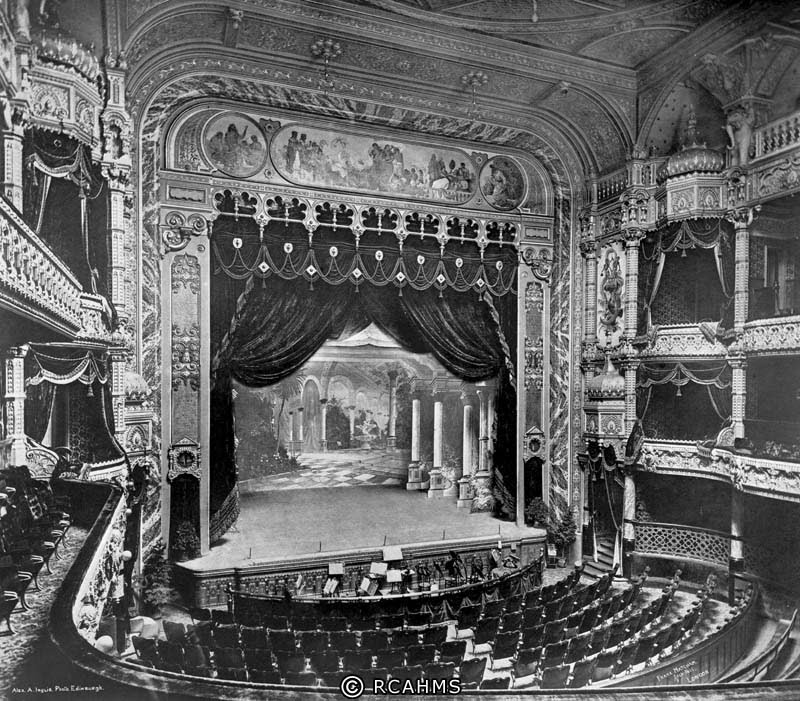
“On 9 May 1911 there was a disastrous fire on stage during a performance by The Great Lafayette. The theatre was full to its 3000 seat capacity for the performance by the popular illusionist. Disaster struck during the finale of his act, the “Lion’s Bride”, which involved the use of tapestries, cushions, tents and curtains to create an oriental setting.


As The Gre
at Lafayette took his bow a stage lamp fell and ignited a st age-drape. The audience was a bit slow to recognise the danger, b eing used to Lafayette’s illusions, and only evacuat ed the auditorium after the safety curtain was rapi dly lowered, and the band struck up the National Anthem.

All 3000 members of the audience walked to safety. The fire on stage took three hours to get under control however and eleven people died, including The Great Lafayette. To add to the mystery days before Lafayette’s death he buried his much loved dog Beauty in Edinburgh. This was only allowed on the condition that he was buried alongside.

Unfortunately for Lafayette, the body of his “double”, who was used in his stage show to aid with the illusions, was buried in his place for a while before his body was found in the theatre and laid to rest with his dog. It is rumoured that his ghost still haunts the auditorium and the Scottish Power Gallery…

After the fire, the stage was rebuilt in three months, and the stars returned, but by 1927 the Empire decided to brace itself for the threat of the talkies by equipping itself for bigger shows.”

Source:

http://www.fctt.org.uk/media/pdfs/festHistory.pdf
http://www.chrishobbs.com/sheffield/greatlafayette.htm


Wednesday, May 11, 2011

PhD in Robust Upscaling of Smouldering Processes at University of Strathclyde

A PhD studentship is available in Robust Upscaling of Smouldering Processes, with a specific focus on linking results from in situ smouldering remediation (Self-sustaining Treatment for Active Remediation or STAR) experiments in the laboratory (0.003 m^3) to field scale (3 m^3 to 300 m^3 and larger) activities. We are most interested in engineers, physicists, chemists and applied mathematicians with experience or at least a strong interest in combustion and fire sciences. This studentship is offered in partnership between the University of Strathclyde, the University of Edinburgh and the company SiREM.

Supervisor: Dr. Christine Switzer

Co-supervisors: Prof. Jose Torero, Dr. Guillermo Rein and Dr. Gavin Grant


The development of in situ smouldering combustion as a remediation technology (STAR) has emphasized small scale experimentation as a vehicle to understand the different processes involved and to optimize the relevant variables such as ignition protocol and flow rates. These tests have served as the basis under which larger scale tests have been conducted. Larger scale tests have been performed with overall success but with different levels of trial and error that has proven not only costly but having some negative effect in the overall performance. The optimized utilization of STAR in real sites needs to have a clear protocol that will help define the conditions that will best allow scaling-up of laboratory data.

Preliminary assessment of the viability of a site will always be done on the basis of small scale experiments. Definition of the details of the large scale implementation requires the inevitable scaling-up of the information obtained. This can be done via modelling but this requires a detailed understanding of the different phenomena involved. This understanding is currently not complete. An excellent source of information that can allow better understanding of the parameters differentiating small from large scale experiments is the thorough a posteriori assessment of the different large scale tests that have been conducted. While some assessment has been done, it has been mostly qualitative and it has never been directly correlated to small scale behaviour.

The proposal for this studentship is based on the need to develop the scale-up understanding from existing (and future) large scale experiments. The analysis of temperature/emissions/igniter/flow data together with the structure of excavation data will allow better understanding of the large scale tests. This information can be fed into existing (analytic and numerical) models to develop up-scaling tools. Furthermore, this information has to be linked to the wide database of small scale experimental data to try to establish an ideal protocol to use bench scale experimentation for the purpose of assessing site viability.

There is one studentship associated with this advertisement and this student will be based at the University of Strathclyde, UK. The studentship is open to individuals within the EEA only and provides a stipend of £13,590 per year. For further information, please contact Dr. Christine Switzer [mailto:christine.switzer@strath.ac.uk]

Monday, May 09, 2011

We are number 1!

FireScienceDegree.com has just posted a list of the 45 best fire science blogs. And we are number 1!

Thanks!

Wednesday, April 20, 2011

PhD funding on subsurface fires. Earth and Natural Sciences

A PhD studentship to study peat fires between University College Dublin and University of Edinburgh is available to a student of any nationality. We are most interested in engineers, physicists and chemists with a background on thermal sciences, some experience in laboratory work and an interest on Earth sciences. See below a brief description. For information and application, see PhD Programme in Earth and Natural Sciences at UCS.

Project BIO 3: Characterising the dynamics and environmental impact of subsurface
peat fires by controlled experiments


Principal Investigator: Dr Jon Yearsley (UCD) – jon.yearsley@ucd.ie
Collaborators: Claire Belcher (University of Edinburg); Guillermo Rein (University of Edinburg)

Fire is an increasing global threat to the carbon store and ecosystem services provided by peatlands (they contain 1/3 of terrestrial carbon). Peatland wildfires are extreme events that are becoming more frequent both in Ireland and internationally. Smouldering peat produces 5‐40% of annual global carbon emissions, but these are presently not accounted for by the IPCC7. They threaten the environment (e.g. habitat destruction and greenhouse gas emissions) and human health (e.g. air quality), but our understanding of these smouldering fires is poor compared to flaming fires. The core of the project will study sub‐surface peatland fire behaviour by performing experimental peat burns for a range environmental conditions. The student will develop the experimental protocol at the Centre for Fire Safety Engineering (University of Edinburgh) and then installed at UCD for the majority of the experimental manipulations. This project combines fire dynamics and Earth systems research and builds upon an existing collaboration between UCD and University of Edinburgh. The work has relevance to climate change mitigation/adaptation, managing peatland carbon stores against the risk of sub‐surface fires and the fundamental science of smouldering fire. We are looking for an outstanding student with interest in undertaking experimental research on the interface between fire dynamics, Earth systems and ecological modelling.
There is one PhD Studentship associated with this Project and will be based at UCD

Tuesday, April 19, 2011

Combustion technology for the remediation of soil contaminants

The next IIE Seminar is on Thursday April 21 at 1 pm, AGB seminar room 3rd floor. Pizza will be served at 12.45pm.

"Self-Sustaining Smouldering Combustion for the Remediation of Organic Industrial Liquids in Soil"


by

Jason I. Gerhard (jgerhard@uwo.ca)
University of Western Ontario, London, Ontario, Canada

Abstract
Self-sustaining smoldering combustion is an innovative approach for clean-up of sites contaminated with liquid waste from industrial processes. This approach offers significant potential for the destruction of highly recalcitrant compounds, such as coal tar and petroleum hydrocarbons, for which clean-up options are currently limited and very costly.

Smoldering is the flameless combustion of a liquid or solid fuel that derives heat from surface oxidation reactions; smoldering of charcoal in a barbeque is a typical example. This research, pioneered at University of Edinburgh, was the first to demonstrate that liquid tar in soil may be effectively destroyed via smoldering. Further research has revealed that the process has the unique properties of being self-sustaining, self-targeting, and self-terminating, all of which may make it uniquely cost efficient and technically effective.

This presentation will illustrate the scientific principles behind this remediation concept, and summarize the six years of research that has been conducted to date. The results of experiments from proof-of-concept to the first in situ field pilot study will be presented. This research represents an ongoing collaboration between University of Edinburgh, University of Strathclyde, and University of Western Ontario. The technology has been licensed to SiREM, who is developing the technology under the name Self-Sustaining Treatment for Active Remediation (STAR).


Short Bio
Dr. Jason Gerhard has over 15 years of experience leading experiments and modelling for investigating organic industrial contaminants in the subsurface and their remediation. He graduated with an honours B.Sc. (Eng.) in Geological Engineering in 1993 and an M.Sc. (1995) and Ph.D. (2002) in Civil and Environmental Engineering from Queen’s University (Kingston, Ontario, Canada). From 2002, he was a Lecturer in Environmental Engineering at University of Edinburgh. Since 2007, Dr. Gerhard holds the Canada Research Chair in Geoenvironmental Restoration at The University of Western Ontario (London, Canada) in the Department of Civil and Environmental Engineering. At Western, Dr. Gerhard is co-director of the RESTORE Group (Research for Subsurface Transport and Remediation) with more than 20 graduate students and postdoctoral fellows, 4 laboratories, and 3 field research programs.

Monday, March 14, 2011

The Twin Towers: 10 years – 10 Lessons on Sustainable Infrastructure


On Monday 14 March 2011, Prof Jose Torero (University of Edinburgh) delivered the public lecture:

The Twin Towers: 10 years – 10 Lessons on Sustainable Infrastructure

Joint event of The Royal Society of Edinburgh and The Royal Academy of Engineering.


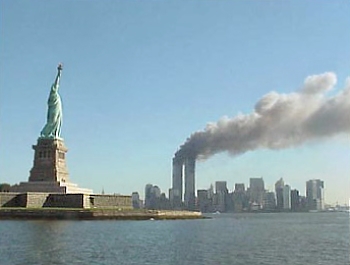
The collapse of the World Trade Center towers represents one of the most dramatic failures of modern structural engineering. One of the most exhaustive and expensive failure analyses in history was conducted in the midst of speculation, controversy and conspiracy theories. In parallel, the world has seen an extraordinary evolution of the super-tall building. Seven of the ten tallest buildings in the world have been built after 9/11. These not only include the tallest four, but eight of these buildings are outside the USA. Furthermore, a strong drive towards sustainability has driven tall building design to levels of innovation never seen before. This presentation will extract, from a decade of questioning and innovation, ten lessons on what is sustainable infrastructure.

A summary of the lecture and the 10 lessons can be read here

Friday, March 04, 2011

Seminars on Flame generated species, and on Amazonian Wildland fires

The Fire Group is hosting 2 seminars next week - see details below

ALL WELCOME

--
Tuesday 8 March, at 1pm
Sanderson Classroom 3
Pizza at 12.45 in Sanderson Foyer

Speaker: Dr Johannes Kiefer, Lecturer in Chemical Engineering, University of Aberdeen

Innovative approaches for the detection of flame generated species

The detection of combustion generated species is an important task from many viewpoints. Firstly, it is essential in the field of combustion research where a major aim is to obtain information about the distribution of the fuel and oxidiser, the products, as well as transient intermediates with high spatial and temporal resolution. This allows the complex phenomena of combustion chemistry, turbulence, heat and mass transfer, and their interactions with each other to be studied. Secondly, combustion species detection is important for environmental and safety reasons, in particular in view of toxic and corrosive products that can cause severe problems when human beings or structures are exposed to them. The presentation will give an overview of recent developments in the field of optical combustion diagnostics using innovative light sources. This includes the use of novel ultraviolet light emitting diodes (LEDs) for the quantitative detection of sulphur dioxide at trace level, and the use of alexandrite lasers, which are actually well known for applications in cosmetic surgery, for imaging of flame radicals.

-
Friday 11 March, at 1pm
AGB Seminar Room

Speaker: Dr Saulo Freitas, INPE Brazil, Centro de Previsão de Tempo e Estudos Climáticos

Wildland fires in Amazonia as seen from the atmosphere

Biomass burning in Amazonia recurrently releases large amounts of trace gases and aerosol particles to the atmosphere. The consequent change from low to very high atmospheric concentrations of oxidants and aerosols therefore affects the radiative, cloud microphysical and chemical properties of the atmosphere over Amazonia. This seminar aims to summarize current studies and numerical regional modeling at INPE of the biomass burning process and its impacts on weather, climate, and air quality. We will also describe the model developments associated with the estimation of biomass burning emissions, the plume rise mechanism and the fully coupled atmospheric chemistry transport model developed to study and forecast smoke aerosol and trace gas concentrations, weather and air quality.

Monday, February 28, 2011

Dr Rushbrook meets the Fire Tornado

Dr Frank Rushbrook, former firemaster of Edinburgh & Lothians Fire Brigade, and one of the leading players in establishing the fire research group in the 1970s, and the 'Rushbrook' fire laboratory in the early 2000s, visited the lab this afternoon. Here is his introduction to the fire tornado experiment.

Friday, February 18, 2011

Princeton - A Learning Experience

I'm typing this post while having coffee at the Woodrow Wilson school on Princeton University's campus. I've been in Princeton over 3 weeks now and I'm absolutely loving it. I get up each morning, eat my breakfast in a ridiculous Hogwarts-esque dining hall then head off to class. I choose what classes I want to sit in on (and I usually try and pack in as many as I can). Last week for example, I attended lectures on Stochastic Calculus of Brownian Motion, Economics of Crime, Democracy in Architecture, Bridge Design and Entrepreneurship. This broad range of classes wouldn't appear unusual to any student studying here - they have a very general view of ‘education’ that I haven't experienced anywhere else.

But, I'm getting ahead of myself. Perhaps I should explain why I'm here in the first place.

I'm studying a PhD in ‘Education in Fire Safety Engineering’. As most of you are aware, Edinburgh already has a very well established fire safety program, but it's not perfect so it can be improved. The question is how? I could spend years trying and testing a range of different teaching styles, or I could just ask a world-class university how they do it.

I chose the latter.

Now, when I sit in on a class I observe student-teacher interactions and take notes on the effects of different teaching styles. Sometimes the students are engaged, other times they're asleep. After studying a diverse range of teachers, I'm beginning to see patterns emerge. It appears there are some fundamental things that if you do/don't do you'll lose your audience, no matter how good you think you are. I'll share some of these with you now.

Probably the most significant observation I've made so far, and from what I can see is the biggest motivator for the students, is choice. In every aspect of what they do here, students are given choice - they choose what classes they do, what subject to specialise in, what topics to present, what groups to work in. This seems to result in a lot less admin which is a bonus, but the real value of this is the positive impact it has on student's self-motivation.
The logic behind it is this: If you want people to be responsible, self-directed individuals, treat them like responsible, self-directed individuals. Having to make choices every day not only promotes accountability and responsibility, but it gives people the opportunity to improve their judgement. And in engineering, particularly in fire safety engineering where reliable data is hard to come by, good judgement is essential.

The second thing that has a huge impact on classroom learning is divergent questioning. From what I've seen/read in my research, most teachers ask convergent questions (i.e. the opposite of what they should be doing). A convergent question is better known as a ‘guess-what-I'm-thinking’ question. The lecturer/tutor may ask something like “what is the main purpose of a roof”. The question is trying to force students towards one answer, so understandably students are reluctant to answer. They realise that there is only one answer and every single other answer they could give...is wrong. So in response to the roof question above, there'll be an awkward silence with students desperately trying to avoid eye-contact, followed by the lecturer answering his/her own question. “It's to keep the water out, obviously. Come on I asked you this question in the test last week remember? I asked, what is the purpose of a raincoat.” There is not really any point in asking convergent questions because asking someone to repeat something is not proof that they have understood it (as almost any teacher will tell you).
My suggestion is that if you want them to memorise a fact, just tell them the fact. Don't ask leading questions.
If you want them to think about something and really understand it, ask them to think. This is where divergent questioning comes in. If you want people to think, ask a question they can't get wrong, one that asks for their opinion. Such a question is phrased like this: “What do you think a roof does?” The students can come up with a range of ideas, and they're all correct. If they don't say what you want them to say, then it tells you something as an educator - namely that the students don't think the information is relevant. At least not yet.

This brings me to my third and final point, purpose. The purpose is the reason why your students are putting in so much of their time and effort to understand new ideas. Every rule in our society, every course in university, every word that's ever been spoken in a lecture has an underlying purpose - a “need-to-know”. Too often lecturers jump into complex methods before creating that “need-to-know”. It's like showing someone a path, without saying where they're going. No two people think the same way, so it's unlikely anyone else apart from you will choose the same path, it just won't make sense to anyone else.
It is often difficult to identify the purpose of a course, despite the fact that many lecturers think they've already done so. There is actually a straightforward test one can use to find a purpose - a reason - for everything. The test was developed by a five year-old - actually, every five year-old - and it consists of asking “Why?”…repeatedly. It's simple, they won't stop until you give them a valid reason, a purpose.

Just yesterday, I had the opportunity to test these ideas, or rather to ask someone else to test these ideas. One of the tutors here was running a tutorial where he was going to ask the students to discuss a lab they'd done the previous week. His idea was to choose a ‘volunteer’ to come up to the board and describe their lab to the rest of the students while he fired convergent questions at them (to make sure they covered all the material). The purpose was to make sure they said everything that might be asked in the exam.

See anything wrong with this picture?

I spent about 10mins explaining the theories above and he left enthusiastic about his upcoming class. Later on I joined him in his tutorial and listened to a full blown discussion going on amongst the students, each one eager to question and challenge each other's point of view. The class finished early, the students said it felt very “comfortable” and the tutor just looked shell-shocked. “That was so much better than last year!” he kept saying. “Thank you!”

I smiled and left. I felt good. After all, I had just improved teaching at Princeton University, even if it was only one small part of it.

How Uncertainty Transforms the Way we Quantify Fire

Posted in the name of Prof Jose Torero.
(related to the previous blog entry "Study or Gamble, but not both - 2nd annual Christmas tree fire test")


It is common practise to use experimental data for many purposes in the analysis of Fire Safety. It can be used as direct input (HRR, flame spread rates, ignition times, etc.) to models (analytical, semi empirical and CFD) as well as to obtain parameters that then can be used as input to other more fundamental models (heat of combustion, thermal properties, etc.). In many cases, due to the complexity of the tests, we rely of single data points to infer the values that we need. We can conduct a detailed analysis of the data and provide output values. In this particular case, the output values were the pHRR and the burn time of the tree. If I was to use this data for modelling, both parameters will be of critical importance and I could define a Q_dot=alpha x t^2 fire on the basis of both parameters. Furthermore, I could divide the HRR curve by the burning rate and obtain a heat of combustion that together with a flame spread model I could convert into another form of Q_dot. I could even use this data as part of a fundamental model that will attempt to predict all processes involved. Much of the research work we do tries to do two things, develop better models and try to make best use of the data we have. Thus this test is a fun example of what we are all about!

So, given the interest that this particular test has created I thought that it will be important to do a little exercise of uncertainty, not to question the winner, or to question the methodology used in defining this winner, simply to establish how important it is to look at these tests with caution and how difficult it is to use them in a manner that is truly representative of the event we are trying to describe via our engineering techniques. Furthermore, it is important to do this analysis to establish one of the key values of apriori estimations coupled with aposteriori explanations.

Apriori estimations have the distinct value of providing predictions that are only biased by the user’s knowledge or experience and not by the knowledge inferred through the observation of the test. Aposteriori estimations always carry the bias associated to having the knowledge of the results of the test. The aposteriori analysis of the apriori predictions reveals the effectiveness of the thought process associated to the apriori predictions. This analysis is extremely valuable in the sense that it can allow to separate the logic that is “user robust” from that that is purely a “guess.” It is also important because it allows establishing which of these “user robust” criteria have large experimental variability. Finally, it allows to identify common errors that can lead you to a “bad guess” but most important to a “good guess.” “User robust” logic with known “variability” is what we want to use to interpret test data and extract this information to introduce into our Fire Safety calculations.

I will do an aposteriori analysis of my estimates not to over-emphasize/or counteract the ridicule of being among the furthest away from the answer or to incontestably establish how my brain seems to have deteriorated with years doing fire research. The objective of this analysis is to encourage you to retrospect on how you achieve your estimate, post it, and let’s see what are the “user robust” criteria, which criteria is not robust, what were purely “guesses” and of these which ones are good or bad.

I know I am taking the risk of taking the joy out of a fun event, but given my role as an educator I find myself compelled to do this. The effort put on the tests and Guillermo’s fantastic statistical analysis encouraged me to do this. In any case, if you do not feel it is important, you will not participate and that is the end of the story!

900 kW and 20 seconds – How did I get there?

The way I reached my estimates, which I tried to qualify, but was told I could not (fair enough), was based on my experience of similar data published in the literature and the previous test conducted in Edinburgh.
When estimating the pHRR I made the following assumptions:

• The variability between tress in the literature was small.
• The pHRR was dominated by upward flame spread (VS) and time to burn out (tBO) of the leaves. Lateral flame spread is negligible compared to upward flame spread of a fuel of such low density, thus the effect of radial spread will happen after the pHRR.
• The base of the fuel burning (A) will be dominated by buoyancy not lateral spread, thus it should be the same for all tests.
• The tBO is very small and the base of the tree tends to have a higher density than the top, thus the pHRR will be generally attained before the flames reach the top of the tree.
• The HRR (given that this is a low density porous medium) will be proportional to the burning volume, so given a constant value of “A” it will be proportional to the height, thus to H=VS.t_b.
• The available data generally estimates a pHRR that ranges between 900 kW and 1100 kW.

So, given that the real height of the tree should not matter, then the pHRR should be similar to that of the literature. Because the tree was small, it was not so dry and it did not seem that dense I decided to opt for the lower bound value and estimate 900 kW.


Now, that being said, generally, literature values tend to be corrected by the time delay of the calorimeter. Our calorimeter has a time delay of about 10 seconds. What does that mean? Basically, it means that oxygen consumption measurements lag by 10 seconds the mass burning rate measurements. This generally makes no difference for events where things do not change within that period. If the event time scale is of the same order of magnitude of the time delay, then the measured value is somewhere between the measurement and that 10 seconds later. So, if I was to take the HRR curve measured by the calorimeter, then the value will be somewhere between what was measured 697 +/- 25 kW and 1000 kW.

An important lesson to learn is that the pHRR of a fast event (actually, even a slow event, but for different reasons) is a very difficult quantity to estimate precisely, thus the +/-25 kW stated as the error is truly only the direct measurement error. The true error will have to include the variability associated to the burn out time, the buoyantly driven upward spread, the global density and the comprehensive experimental error which is a parameter that is relevant in this case because the times are so short. So, any estimates within +/- 200 kW will probably have exactly the same value if the variable used is the pHRR. Thus 11/28 of you truly guessed the same answer.

If a different variable, such as the average HRR, or the Heat of Combustion was to be used as the “estimate,” then once all corrections due to time delay were made, would have probably delivered a smaller error bar.


The second variable to be estimated was the burning time. My estimate was 20 seconds and was based on a simple calculation of a typical upward flame spread rate of 10 cm a second. This had nothing to do with trees but with a fuel I know better (polyurethane foam). I estimated that the global value of “krhoC” is dominated by the density and I assumed that the density was more or less the same for both fuels. Thus I took that number. The tree was about 1.5 m, this gave about 15 seconds, time to burnout is so short that once the flame spread to the top, I could assume the fire was over.

Now, here is where I tried (unsuccessfully) to introduce a qualifier, I could not engage to estimate the initiation time (from the moment of ignition to the moment when the fire truly takes off). Furthermore, after the pHRR, what is left is lateral spread, then the branches and finally the trunk. The trunk will extinguish as soon as the branches die (bulk wood does not burn unless assisted!), but the lateral spread (being dominated by the shape of the tree) and the branches (being dominated by their individual shape and size) are impossible to predict. So at the end I gave up and simply estimated the time that it will take to achieve the pHRR from the moment the fire truly takes off. I reluctantly added a 5 second buffer for the slow initiation. While not a good estimate for what I was being asked, there is something to be said for the accuracy of the estimate! From the HRR curve we can establish that the primary burning will be somewhere between 10-20 sec (considering the instrument delay).

Now, what have I learnt, buoyancy is such a strong driving force that the estimate of the upward flame spread is a very robust one. The estimate of total burning time is one that carries a massive error bar, thus I will be reluctant to dismiss any of your estimates. From my perspective 28/28 gave estimates that I will consider within the expected error bars. Needless to say, last year’s Christmas tree was the proof to this point; the initial time could have been infinite if I did not decide to push the candle towards the denser part of the tree!

A final point, did I think of all of this in the 2 minutes that passed between the moment I learnt of the bet and the moment I provided my estimates? Obviously not! Most of this knowledge resides within your experience, and the estimate is an “educated guess.” Nevertheless, for the estimate to be adequate we need to carefully assess the question being asked (which I unfortunately decided to ignore) and the question needs to be posed correctly (meaning that what is being asked needs to have error bars that are smaller than the discrimination we are seeking). Otherwise, our guess will not be educated, nor it will be an estimate, it will just be a guess. If the error bars are small your chances of being the closest answer are very small (the educated estimate will have a much greater chance), but if the error bars are large you have as much of a chance to get it right as the most educated of estimates.

So citing Guillermo Rein: “while many stories can be told aposteriori,” and 3 hours of rationalizing my estimates can lead to this story, the stories need to be told and the discussion needs to follow. It is within the aposteriori 3 hours of introspection that I have truly managed to gain some insight into what happened not within the 2 minutes it took me to “guess.”

Congratulations to the winner!

Prof Jose Torero.

Saturday, February 12, 2011

Study or Gamble, but not both - 2nd annual Christmas tree fire test

An esteemed colleague had generously donated a Christmas tree to the scientific cause for the 2nd annual Christmas tree fire test. It had been used in the living room during the winter celebrations.

The tree was a Nordmann Fir of conical shape, 1.5 m tall and 0.9 m diameter at the bottom. It weighted 4.74 kg and was in dry conditions (measured in the oven at ~8% moisture content in dry base) after having spent one month not watered inside a warm living room.

Before conducting the experiment, fire experts were asked to bet on the peak heat release rate (pHRR) and the burning time (t_b). We recorded 28 guesses (£1 was collected per guess). A person with no research experience and no previous knowledge on fire dynamics (an international lawyer) was asked to provide a guess and act as control. NOTE: This required explaining the concept of HRR in layman terms, after which the control quantified the pHRR in terms of the equivalent number of burning matches.

Significant spread was recorded in the guesses. pHHR guesses ranged from 400 and 2300 kW, with average at 1173 kW. Guesses for t_b ranged from 15 to 377 s, with an average of 120 s. Two people provided guesses for pHRR but not for t_b, so they were assigned the average t_b value from the other participants.

Figure 1. Sequence of images, from left to right: The first day (early December 2010) when it was brought to the living room. Just seconds before ignition when the tree was inside the medium scale calorimeter. Fire spread over the tree about 40 s after ignition. Remains left after the test.

The tree was ignited putting a small household candle next to the tree trunk at 1/3 of the height from the base. The HRR was measured using oxygen consumption calorimetry (corrected for CO and CO2 production). Figure 2 shows the HRR as a function of time. The growth of the fire is very fast, reaching a peak near 700 kW, 45 s after candle ignition.  The decay is also fast, and reduces the fire to 50 kW 60 s after the peak. The peak value (pHRR) was 697 kW ± 25 kW. And the burning time t_b was 146 s ± 24 s. This was measured by visual observation using the video of the test and defined as the period going from first observed ignition of a tree element (between 0 and 24 s after candle ignition) to the end of significant flaming (between 146 s and 170 s).

Figure 2. Evolution of the HRR (power) as a function of time measured by oxygen consumption calorimetry.The ranges of observed times for the ignition of first tree element and end of flaming are indicated.

A short video of the test can be seen below (NOTE: it starts 30 s after ignition and lasts for 55 s):


Measurements and guesses are plotted in Figure 3. There was only one guess falling within the measured result range. This person won the bet. For the quantification of how close a guess was to the measurements, the Euclidean distance was calculated, nondimensionalizing each guess by the measurement. The resulting average distance is 0.97, with minimum 0.1 and maximum 2.12. The control was at a distance of 0.26, well below the average and closer to the result than 89% of the participants.

Figure 3. Scatter plot of the guesses for the Peak HRR and the burning time. Measurements and experimental uncertainty are in blue. Histograms of guesses for each quantity are included.

The participants were grouped in three sets: Academics, Postdocs and Students. The years each participant has been researching fire was estimated and plotted against the distance of each guess (see Figure 4). There is a positive correlation of distance with experience. Students and postdocs show a similar large slope, but Academics are a distinct group from the rest and have a smaller slope.

Figure 4. Non-dimensional Euclidean distance from guess to measurements vs. years in fire research of each participants. Blue line is the trend of the Student and Postdoc populations.

Upon seeing this data, one could conclude that the longer you stay in research, the less you earn. And, study or gamble, but not both!

Wednesday, February 09, 2011

EU Project on Aircraft Fire Safety starts

The University is one of 13 partners collaborating on a three year, EU funded research project in Aircraft Fire Safety. Below is a photo of the delegates who attended the 'kick-off' meeting in Poitiers, France, in January this year.

Monday, January 31, 2011

Wilde, mask and peer review

I just read that once Oscar Wilde wrote:

"Man is least himself when he talks in his own person. Give him a mask, and he will tell you the truth".

This might describe part of the rational on which the blind peer-review system stands? :)

Sunday, December 26, 2010

Forecasting Fire on Scottish TV News

On 29 Nov 2010 Dr Guillermo Rein was interviewed by Scottish TV about a recent research paper published about "Forecasting  Fire Growth".


On the same day he was interviewed for BBC Radio Scotland and  The Scotsman.

Monday, December 20, 2010

Fertilizer fire aboard cargo ship

A recent journal paper titled "Small-scale experiments of self-sustaining decomposition of NPK fertilizer and application to the events aboard the Ostedijk in 2007" has published in Journal of Hazardous Materials. Its content is presented here.


The global fertilizer industry produces 170 million tonnes of fertilizer annually. As the global population increases and countries develop, this is expected to rise. Production sites are limited to locations with good availability of key raw materials. Therefore, large quantities are required to be shipped to the point of use.

Fertilizers contain three main ingredients essential for plant growth: nitrogen, phosphorous and potassium (NPK). These are present in various forms, however it is the presence of ammonium nitrate that constitutes the biggest risk. Ammonium nitrate is classified as a Dangerous Good by the UN Recommendations on the Transport of Dangerous Goods. This is because in the presence of an initiating event, ammonium nitrate will undergo self-sustaining decomposition. This is a chain reaction that occurs when a molecule of ammonium nitrate breaks down and releases heat which allows the decomposition of further molecules. In the presence of organic material this may result in explosion as in Texas City (1947) in which 581 people were killed.

Figure: The Ostedijk on 21st February (the 5th day) after the hold was opened and before specialized fire-fighting activities had commenced. Derived from photograph courtesy of Agencia EFE.

The research presented here gives an experimental insight into the decomposition of NPK fertilizers, highlights some of the limitations of the current UN Recommendations and applies the results to the events aboard the cargo ship Ostedijk in 2007.

The Ostedijk was carrying a cargo on NPK fertilizer from Norway to Spain when an accidental decomposition reaction occurred. The decomposition continued for seven days before it was stopped by partial flooding of the cargo hold as previous attempts to cool the cargo had been unsuccessful. During this time, a large plume of toxic gases formed and the crew had to be evacuated from the ship.

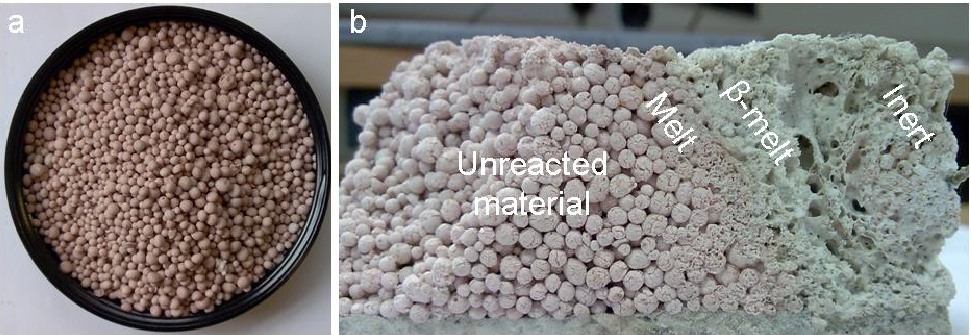
This unique set of experiments was performed in the laboratory using NPK 16.16.16, an industrially available fertilizer, and three different apparatus. The propagation behaviour was studied in an apparatus similar to that proposed by the UN test. Thermo-gravimetric analysis was performed to identify the reactions occurring and investigate the reaction mechanism. Finally, the state of the art for testing reactive materials, the Fire Propagation Apparatus, was used to find the conditions under which the reaction would become self-sustaining and to measure the heat of reaction.

The experiments showed beyond doubt that NPK 16.16.16 can undergo a self-sustaining decomposition reaction. This results in temperatures up to 350°C and releases heat at a rate of 1.8 MJ/kg of reacting fertilizer. This is in contradiction to the UN classification that the material is free from the hazard of self-sustaining decomposition. The paper allows us to understand and quantify some of the observations during the accidental event aboard the Ostedijk.


Figure: (a) Unreacted fertilizer granules and (b) cross section showing partially reacted sample with 4 phases visible.

These experiments are important as there is very little research in the open literature regarding decomposition of ammonium nitrate containing fertilizers and this is the first time such measurements have been applied to a real scenario. They also provide an insight into this complex risk and the controlling mechanisms. The data and experimental methods can be used to further investigations into other incidents which may help in identifying causes of, and reduce losses from, this phenomenon.

Saturday, December 11, 2010

Prof Jose Torero's Christmas Lecture


Fire: A story of fascination, familiarity and fear

University of Edinburgh Christmas Lecture 2010
Presented by Prof Jose Torero
Recorded Wednesday 8th December 2010


Prof Jose Torero with the Tam Dalyell medal.

Wednesday, December 08, 2010

FireGrid: An e-infrastructure for next-generation emergency response support

by Dr Sung-Han Koo

A recent journal paper titled "FireGrid: An e-infrastructure for next-generation emergency response support" has been published in the Journal of Parallel and Distributed Computing. Its content is presented here.

The costs of fire are great, commonly estimated in the range of 1-2% of GDP. Despite this, emergency service intervention at fires is often reliant upon very basic information (i.e. fire alarm panel information) or simple “gut instinct” of experienced fire officers. This need not be the case in the modern era, when a range of technologies are available which, if effectively harnessed, could transform the way in which fire emergencies are tackled, thereby significantly impacting the costs associated with failures. Here we describe development and demonstration of a novel concept which integrates sensor technologies, fire simulation, High Performance Computing (HPC) and knowledge-based reasoning, to provide an “intelligent” emergency response system known as FireGrid.

The heart of the system is the sensor-linked fire model (described in more detail in reference 17). While fire simulation has found wide application historically for design purposes, the uncertainties of fire development defeat any attempt to provide a true predictive capability of hazard evolution, generally precluding real-time use. We bypass these uncertainties by continually updating our model with a flow of sensor-derived information regarding conditions in the building. The modelling strategy exploits Monte-Carlo techniques in combination with Bayesian inference for “steering”; being “embarrassingly parallel” in nature it is ideal for implementation on multiprocessor HPC systems. The output contains embedded probabilistic information about the likelihoods of various future hazard conditions, encompassing both threat to humans (i.e. escaping occupants, and incoming fire and rescue personnel) and to the building itself (in terms of structural weaknesses, or collapse potential). The interpreted information is conveyed rapidly to the end user, i.e. the “incident commander”, to provide decision support information that can effectively assist their intervention strategies.


Initial application of a system such as FireGrid would be most relevant to high-risk and critical infrastructures, including tall buildings. It is readily apparent that better information to incident commanders could be vital in avoiding scenarios comparable to the World Trade Center tragedies, where emergency responders continued intervention operations totally oblivious to the impending
collapse of the towers. FireGrid is an ambitious vision, and its success also depends upon an effective partnership and engagement with potential end users. Our initial project was undertaken in conjunction with various members of the UK fire and rescue services, culminating in a live fullscale demonstration test attended by a broad audience including a senior fire officer. The complex evolution of the fire, with unexpected behaviours and ultimate transition to “flashover”, was an ideal test of the sensor-linked model running on the grid, and the system capabilities were effectively demonstrated. Further development of such systems extends a genuine hope that some of the chronic and long-standing problems associated with accidental fires might be eventually be overcome, with wide–ranging benefits to all relevant stakeholders.


Editor note: A related paper is discussed in "Towards the forecast of fire dynamics to assist the emergency response"